Thinking about buying a rental in McKinleyville? It can be a smart move, but this is one of those markets where the details of the specific property matter just as much as the price. If you want to avoid surprises with zoning, utilities, maintenance, or future use, it pays to know what to check before you write an offer. Let’s dive in.
Why McKinleyville draws rental buyers
McKinleyville sits in unincorporated Humboldt County, about five miles north of Humboldt Bay, and the county describes it as a place with a mix of urban and rural land uses. It is accessible by US 101 and State Route 299, and California Redwood Coast – Humboldt County Airport is right in McKinleyville. Humboldt Transit Authority also serves the area.
From a rental-demand standpoint, the local picture is broader than a single tenant type. Census QuickFacts reports a 2020 population of 16,262, a 62.9% owner-occupied housing rate, median gross rent of $1,607, median owner-occupied value of $457,600, median household income of $73,327, and a mean commute time of 21 minutes. Along with local retail, professional services, and a TK-8 school district, those facts point to demand from households, employees, and commuters.
Know the property type options
McKinleyville can offer several types of investment opportunities, but they are not all created equal. The McKinleyville Community Plan calls for sites that can include single-family homes, second units, multifamily apartments, mixed residential-commercial development, special occupancy parks, and other housing types.
That means you may find opportunities in detached homes with possible ADU potential, small multifamily properties, and mixed-use infill sites. Still, the exact rules can change from parcel to parcel. A property that looks flexible at first glance may have different limits once you verify its land-use designation and overlays.
Zoning matters more than you think
Before you buy, confirm the parcel’s current zoning and whether the existing use is allowed. You should also ask whether the lot may allow a second unit, future duplex use, or multifamily conversion. In McKinleyville, land-use designations include Residential Low Density and Residential Medium Density, and adopted mapping can be reviewed through the county’s WebGIS.
This is especially important for buyers who want options. If your long-term plan includes adding a unit, expanding income potential, or repositioning the property later, you want to know what is actually feasible before your offer goes in.
Watch for airport overlays
One of McKinleyville’s most local property issues is airport influence. Because the county airport is in McKinleyville, some parcels may fall within airport-related noise or safety areas.
The community plan says new residential structures within airport noise contours may require acoustical analysis. It also requires noise easements in airport approach and flight-path areas, and it states that newly placed manufactured homes above certain noise levels are prohibited. For a rental buyer, that can affect tenant comfort, future improvements, replacement plans, and resale.
Check floodplain and wetland conditions
Site conditions can shape both cost and usability. The McKinleyville Community Plan identifies FEMA-delineated floodplains along several local creeks and notes special restrictions in wetland buffer areas.
That means you should verify whether a property sits in a floodplain, streamside area, or wetland buffer before you commit. These factors can affect development options, maintenance planning, and your overall risk profile.
Utilities can change the numbers
Utility setup is one of the most important underwriting items for a rental in McKinleyville. McKinleyville Community Services District provides water and wastewater service in the area and reports about 6,700 active water customers and about 6,000 active sewer customers.
Water rates are based on meter size. Sewer charges include a base charge plus a usage-related impact fee. Before you buy, it is worth confirming service status, meter size, and whether any zone-specific charges apply because those details can affect your monthly operating costs.
Sewer versus septic is a big distinction
Not every property should be evaluated the same way. If a property is not connected to community sewer, Humboldt County says every occupied property must have an approved sewage disposal method, and when community service is not available, an approved onsite system is the alternative.
The county also states that non-standard onsite wastewater systems require operating permits and periodic inspections. In practical terms, a rural-edge rental with septic should be inspected very differently from a sewered in-town house. If a property also relies on a well, you will want a more careful review of the full utility setup.
Moisture and maintenance are real issues
McKinleyville’s coastal climate makes moisture management a year-round ownership issue. MCSD describes mild, rainy winters and cool, dry summers. Nearby Eureka’s 2024 climate report logged 57.86 inches of precipitation, 191 fog days, and a highest gust of 48 mph.
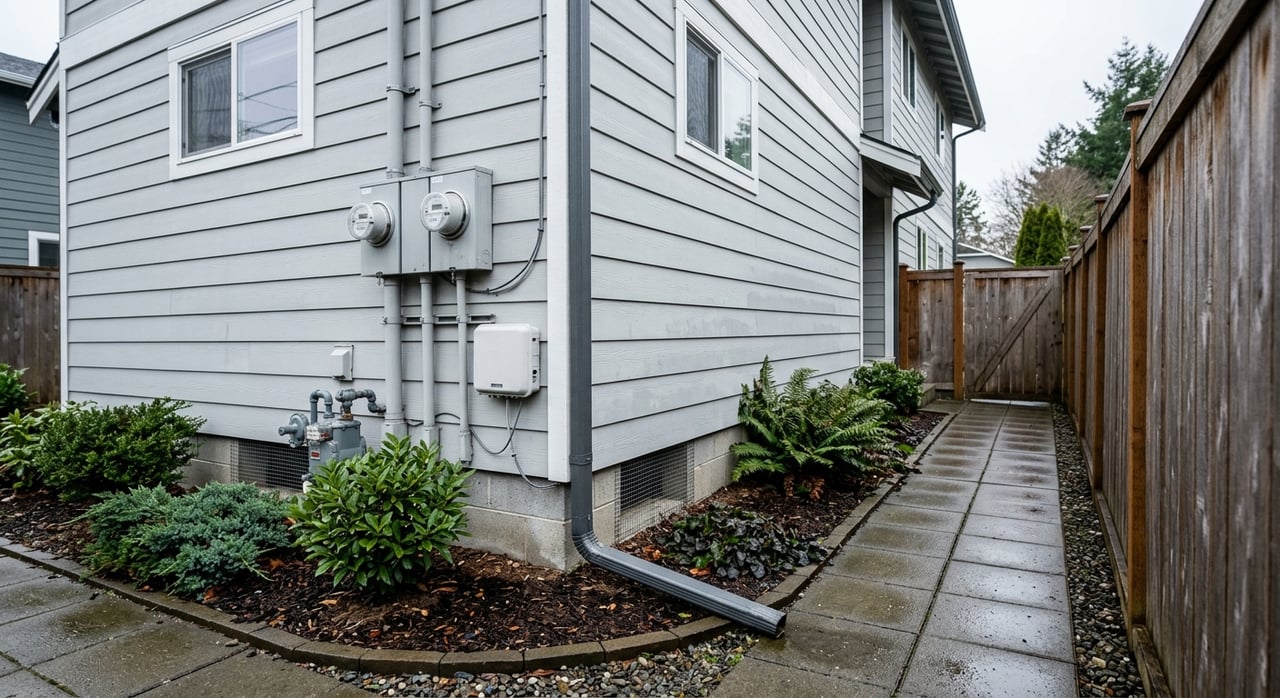
For rental owners, that creates a practical maintenance checklist. Roof condition, gutters, flashing, crawlspace ventilation, grading, drainage, and exterior rot deserve close attention during due diligence. A property that looks fine on the surface can still have deferred maintenance tied to damp conditions and exposure.
Short-term rental rules are limited
If you are considering a short-term rental strategy, do not assume a property will qualify. Humboldt County adopted a 2024 short-term rental ordinance that places McKinleyville in the Coastal Greater Humboldt Bay Area cap area.
In that area, short-term rentals are limited to 2% of housing stock. The ordinance also says ADUs permitted after January 1, 2020 may not be used as short-term rentals. If short-term use is part of your investment plan, confirm permit eligibility before you close, not after.
Questions to ask before writing an offer
A good rental purchase in McKinleyville usually comes down to asking the right questions early. This is where local guidance can save you time, money, and frustration.
Questions to ask your agent
- What is the parcel’s current zoning?
- Does the zoning allow the present use?
- Could the lot allow a second unit, duplex setup, or future multifamily conversion?
- Is the property in an airport noise contour, airport safety area, wetland buffer, streamside area, or FEMA floodplain?
- How do parking, trash pickup, and service access work at this property?
- If short-term rental use is a possibility, does the property appear to meet county rules for parking and road access?
Questions to ask your lender
- What loan product fits this property type?
- How will projected rent be evaluated?
- What reserve requirements should you expect?
- How will insurance factor into approval?
- Are there added financing challenges if the property is a manufactured home, duplex, or small multifamily asset?
Questions to ask your tax professional
- How will reassessment affect your post-closing property taxes?
- Should you expect a supplemental tax bill after purchase?
- How will depreciation affect your long-term numbers?
- What bookkeeping system will make rental income and expense tracking easier?
- If you may change the property’s use later, what tax planning should you consider now?
Build your analysis parcel by parcel
The biggest takeaway for McKinleyville investors is simple: do not evaluate rentals in broad strokes. A sewered in-town home may perform very differently from a rural-edge property with onsite wastewater. An airport-influenced parcel may have a very different improvement path than a standard residential lot.
The same goes for future flexibility. Some properties may offer better second-unit or small multifamily potential, while others may have tighter constraints tied to overlays, access, or short-term rental rules. In McKinleyville, the best investment decisions are usually the result of careful, parcel-specific due diligence.
If you want help sorting through those details before you buy, working with a local team can make the process much clearer. Mike and Marci Pigg can help you look at McKinleyville rentals with a practical, step-by-step approach so you can move forward with confidence.
FAQs
What should you verify before buying a rental property in McKinleyville?
- You should verify zoning, current allowed use, utility setup, floodplain or wetland issues, airport overlays, and whether the property is on sewer or an onsite wastewater system.
How do airport rules affect rental properties in McKinleyville?
- Some parcels may be in airport noise or safety areas, which can affect acoustical requirements, noise easements, manufactured home placement, tenant comfort, and future improvements.
Why does sewer versus septic matter for a McKinleyville rental?
- Sewered properties and properties with onsite wastewater systems can have very different inspection needs, operating requirements, and long-term maintenance costs.
Can you use an ADU in McKinleyville as a short-term rental?
- Under Humboldt County’s 2024 ordinance, ADUs permitted after January 1, 2020 may not be used as short-term rentals in McKinleyville’s capped coastal area.
What maintenance issues are most important for McKinleyville rental buyers?
- Because of the local climate, you should pay close attention to roofs, gutters, flashing, crawlspace ventilation, drainage, grading, and signs of exterior rot or moisture-related wear.