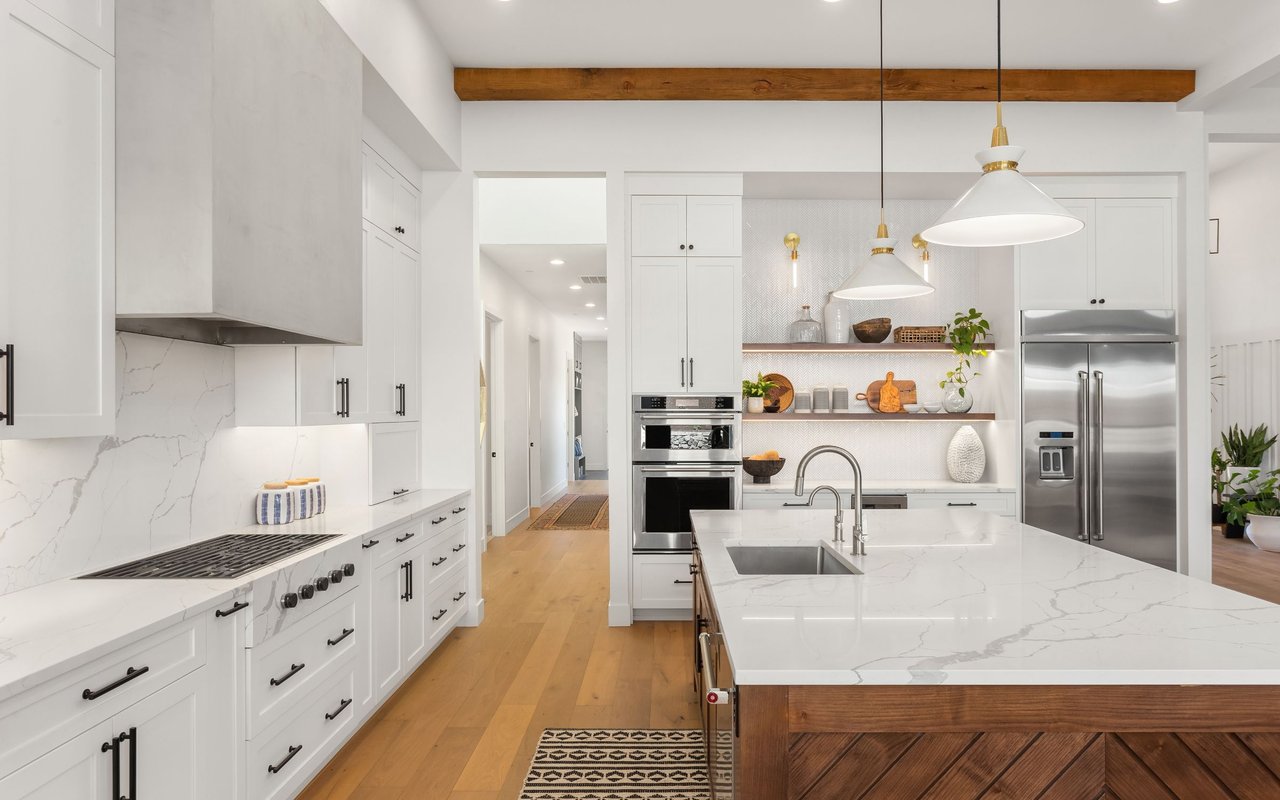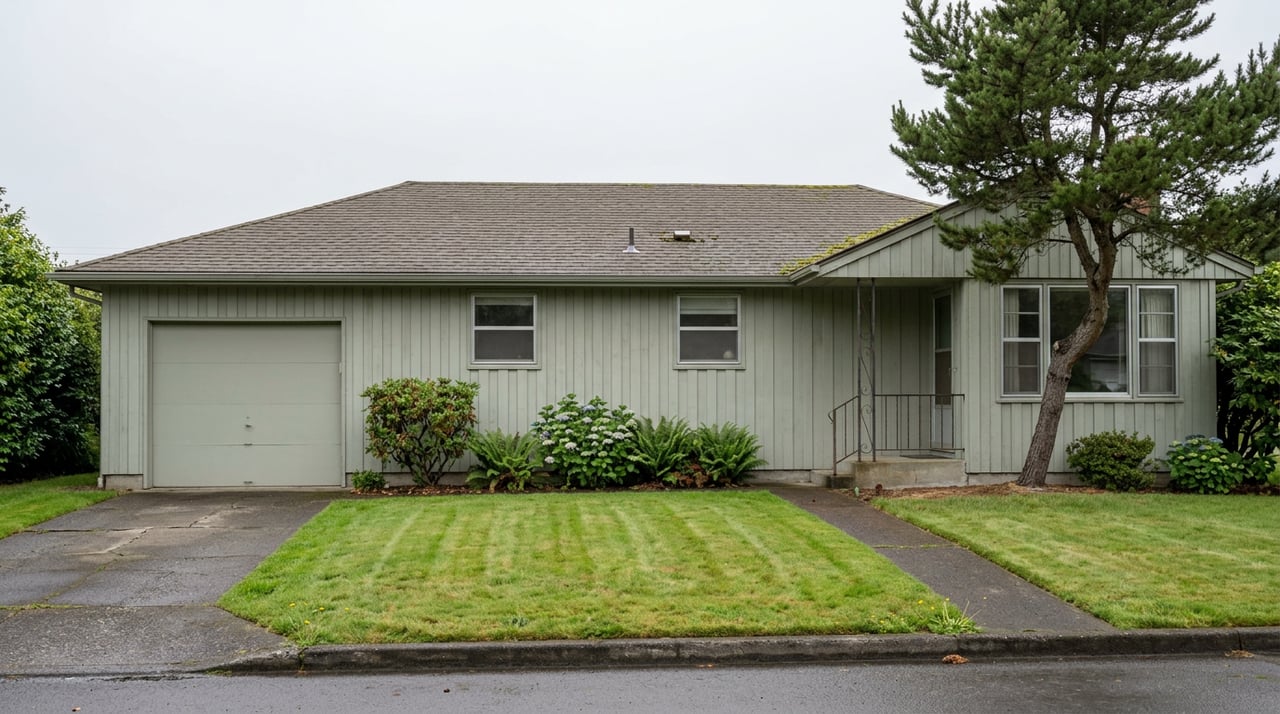
Dr. Josh Zender stood in front of the McKinleyville Municipal Advisory Committee on July 22 with a slide of a glass filled halfway with water. He wasn't talking about drought. He was previewing a Cal Poly Humboldt report that had just landed on the committee's desk, and he wanted the room to sit with the ambiguity before he walked through the numbers. In his presentation, Zender showed a slide with a photo of a glass filled halfway with water.
The report is the McKinleyville Economic Development Study for 2030, and if you're weighing McKinleyville against Arcata, Fortuna, or anywhere else in Humboldt County right now, it's worth reading past the headline. The study confirms what a lot of people already suspected: McKinleyville is growing faster than any other community in the county. What it also shows, buried a few pages later in the same document, is that the town's housing stock has barely moved in response. That gap between how fast McKinleyville is growing and how little it has built is the thing worth understanding before you write an offer here.
The Growth Everyone Already Knew About
Zender displayed a chart that shows that McKinleyville is the fastest growing community in Humboldt County, and from 1990 to 2020, McKinleyville's population increased by 55 percent to 16,645. On income, the town is doing better than its neighbors. When it comes to household income, McKinleyville is better off than most communities in Humboldt County, with a median household income in 2024 of $73,327, greater than the household income for Arcata, Fortuna and Humboldt County, though noticeably lower than the $99,122 median for the State of California.
None of that is surprising to anyone who has watched the town add rooftops along Central Avenue over the past two decades. What comes next in the report is the part that should change how you think about the market.
The Number That Doesn't Match
Here's the contradiction. A town growing 55 percent over three decades, with household income that outpaces most of its county neighbors, should be a place where builders are showing up. Housing built between 1980 and 1999 makes up 34 percent of McKinleyville's homes, compared to 25 percent for both Humboldt and California as a whole. That's a town that built heavily once, decades ago, and then largely stopped. From 2020 to present, only 1 percent of McKinleyville's housing stock has been built.
One percent. In a town the county's own study calls its fastest-growing. That's not a market cooling off after a boom. That's a market where population kept arriving and construction didn't follow, which is a very different problem than a slow market, and a much harder one to fix quickly.
The strain shows up exactly where you'd expect. Around 40% of McKinleyville residents spend more than 30% of their income on housing, and developers said they feel hamstrung by the overlapping webs of environmental, local and state regulations that make constructing more housing difficult. On the rental side specifically, the study tracked the trend over a decade and it's moving the wrong way: between 2014-18 and 2019-2023, the portion of renters paying 30 percent or more of household income on rent in McKinleyville increased slightly from 57.4 percent to 59 percent.
| Measure | McKinleyville | Comparison |
|---|---|---|
| Population growth, 1990-2020 | 55% | Fastest in Humboldt County |
| Median household income, 2024 | $73,327 | Higher than Arcata, Fortuna, Humboldt County; lower than California's $99,122 |
| Homes built 1980-1999 | 34% | vs. 25% for Humboldt and California overall |
| Homes built since 2020 | 1% | — |
| Renters paying 30%+ of income on rent | 59% (2019-2023) | Up from 57.4% (2014-18) |
The Cal Poly Humboldt research team named the problem directly in the report's concluding section. McKinleyville isn't short on assets, the report argues, it's short on the connective tissue between them: housing, transportation, health care, local business, and civic life aren't yet working as one system. The word the report settles on is fragmentation. It's a fair word.
The One Real Answer Coming, and Why It's Not the Answer Most Buyers Are Waiting For
There is new housing supply headed for McKinleyville. It's just not the kind that helps a family shopping for a starter home or a young professional trying to buy their first place.
Humboldt Commons is a senior living community taking shape on roughly 15 acres south of Hiller Road, in the same Town Center that's central to the county's growth planning. The nonprofit community will include cottages, apartments and shared gathering spaces designed to support active aging and connection between residents. County planning documents put the main project at up to 109 affordable senior housing units on that 15-acre parcel along Hiller Road between McKinleyville and Central avenues, and that's before the adjacent parcel. In addition to those 109 homes, Life Plan Humboldt is subdividing a parcel on the same property for up to 50 affordable senior homes which will be built and managed by a separate nonprofit.
That's potentially close to 160 new residential units in a town that has otherwise built almost nothing since 2020. LSW Architects is designing the development, and Pacific Builders will serve as the project's contractor. The nonprofit behind it, Life Plan Humboldt, was founded in 2020 by local residents seeking more choices for aging well in Humboldt County. Board president Ann Lindsay has been clear that this isn't a conventional rental community. It's designed on an entry-fee and monthly-fee model, and as she put it, "it's actually not a rental scene."
The timeline matters if you're planning around this inventory in any way. The plan is for the first residents to move in by early 2029. The project has also hit real friction along the way. County planners denied a request to waive road-widening requirements on Hiller Road, and Emma Haskett of Life Plan Humboldt said widening and paving the Hiller Road segment will cost $200,000, a cost the project now has to absorb before it can move forward.
Here's the mechanism worth understanding. Age-restricted senior housing can eventually free up existing homes when residents who move in sell the houses they're leaving behind, sometimes called filtering in housing economics. That process takes years and depends entirely on how many current McKinleyville homeowners, versus people moving in from elsewhere, fill those 160 units. It does nothing for the family or first-time buyer competing for inventory today. If you're househunting in McKinleyville right now, Humboldt Commons is a demographic story unfolding on a multi-year timeline, not a supply release valve for this year's market.
The Other Lever: What Happens to the Empty Storefronts
The study's other major recommendation is aimed at commerce, not housing directly, but it shapes the same Town Center that Humboldt Commons sits in. Draft strategies in the plan include maintaining an inventory of vacant commercial properties, attracting businesses to fill those vacancies, creating a "blue-ribbon" committee to reduce regulatory barriers and allowing pop-up businesses and events to take place in the McKinleyville Town Center prior to build out.
The Town Center itself is a defined 141-acre area, not an abstraction. It includes 141 acres smack dab in the middle of town, extending from Pierson Park to McKinleyville Avenue and from Railroad Drive to south of Hiller Road, including the commercial area containing Burger King and Starbucks. The full build-out envisioned for that district, with multi-story buildings holding retail on the ground floor and housing above, has been discussed by county officials in terms of decades, not years. Fifth District Supervisor Steve Madrone has said the full timeline for developing the remaining land could run 20 to 30 years, with the rest of the parcel's fate still undetermined.
That's the honest read on the Town Center as a housing fix. It's a long game. The near-term strategy is about filling empty storefronts and cutting red tape for small business, which matters for daily life in McKinleyville but won't move the needle on the housing shortage the study itself flags.
What This Means If You're Comparing McKinleyville Right Now
If you're weighing McKinleyville against Arcata or another Humboldt town, the study gives you three things to factor into that comparison instead of just a median price.
First, expect competition for existing inventory to stay tight. A town that added population steadily for three decades while building almost nothing since 2020 is not a market where turnover happens easily. Second, don't count on Humboldt Commons or the Town Center build-out to change that competition in the next year or two. Both are real projects with real momentum, but both run on multi-year timelines measured in years and, in the Town Center's case, potentially decades. Third, McKinleyville's income advantage over Arcata and Fortuna is real, but it's an advantage relative to other Humboldt towns, not relative to the state, which is worth keeping in mind if you're comparing affordability across California more broadly rather than just within the county.
None of this means McKinleyville is a bad place to buy. It means going in with a clear read on why the inventory feels tight and knowing which parts of the pipeline will actually loosen it, and when.
FAQ
Does this study mean home prices in McKinleyville will keep climbing? The study doesn't forecast prices, but the mechanism it documents, population growth far outpacing new construction, is the kind of imbalance that keeps competition for existing homes elevated. That's a structural pressure to watch, not a prediction.
Will Humboldt Commons help buyers looking for a family home today? Not directly, and not soon. It's age-restricted senior housing with a planned first move-in of early 2029, and any effect on the broader for-sale market would come later, if and when current homeowners who move in sell the homes they're leaving.
Is the Town Center actually going to add housing I could buy? Eventually, potentially, but the timeline discussed by county officials for the undeveloped portion runs into decades, not years. The near-term work is regulatory and commercial, aimed at vacant storefronts and reducing barriers for small business, not at adding for-sale housing stock right away.
If you're trying to figure out where McKinleyville actually fits against the rest of Humboldt County for your specific situation, that's exactly the kind of conversation worth having before you start touring homes. Mike and Marci Pigg have spent their careers in this county and can walk you through what the numbers mean for your search, street by street. Let's Connect.